
September 25, 2026

Get the latest property updates, market reports, and expert insights — delivered straight to your inbox.

Blanca Commercial Real Estate recently arranged ADP’s lease at the 250-acre Waterford Business District office park in Miami.

MEDIA CONTACT: Levy Public Relations
Miami’s office market is no longer defined by migration alone. What is driving performance today is expansion, constrained supply and long-term corporate commitments that continue to support growth, even as many U.S. office markets navigate ongoing uncertainty.
At its core, this cycle is defined by the imbalance between rising demand for space and the limited availability of high-quality office product. Companies are not only maintaining a presence in Miami, but they are scaling, and that expansion is increasingly shaping the direction of the market.
That dynamic has been evident over the past five years and continued in the first quarter. Leasing activity has settled in above pre-2020 levels and the Miami-Dade County office market continues to record positive absorption. With 89,000 square feet of positive absorption this quarter, the Miami-Dade office market has absorbed approximately 3.4 million square feet since the start of 2021.
That strong demand has pushed asking rents to $66.30 per square foot, up 10.6 percent year-over-year, and 53 percent since first-quarter 2021. The market also continued to attract institutional attention, underscored by Palantir’s decision to establish its headquarters in Miami.
Underlying these numbers is a structural advantage that continues to set Miami apart: utilization. The city leads major U.S. metros in workplace attendance, reinforcing the necessity of physical office space in a way many markets have yet to reestablish. Combined with sustained wealth migration and ongoing business formation, this has created a more durable demand base than what we saw in earlier cycles.
What is increasingly defining the market today is not just new entrants, but expansion from companies already here. The largest lease of the quarter — Iru’s 92,000-square-foot commitment at Mayfair in the Grove — reflects that evolution. It signals a shift from initial establishment to meaningful growth, which is becoming a more important driver of demand across the market.
As that demand deepens, it is also broadening geographically. Brickell remains the financial core of the city, but limited availability in premier buildings is pushing tenants into adjacent, high-quality submarkets. Coconut Grove, with a Class A vacancy of just 3.6 percent, has emerged as one of the tightest office markets in the county, while Coral Gables continues to benefit from tenants seeking quality alternatives to Brickell’s constraints.
At the same time, newly repositioned and upgraded assets are playing an important role in absorbing demand. Renovated properties such as One Biscayne Tower in downtown Miami and the Waterford Business District near Miami International Airport are effectively acting as a release valve, offering modernized space and timely amenities that meet current tenant expectations while bridging the gap between limited new supply and active demand.
Nowhere is scarcity more evident than in Brickell itself, where Class A, Tier I vacancy stands at just 5.4 percent and rents average $136.77 per square foot, with trophy assets commanding even higher premiums. In that context, the pipeline of future supply becomes increasingly important. Projects such as 1401 Brickell by Santander will help address constrained trophy inventory, while continued activity at Citadel’s headquarters reinforces long-term institutional conviction in the market.
At the higher end of the market, boutique and lifestyle-driven office developments are also emerging to meet evolving tenant preferences. Projects such as The Offices at THE WELL and 3601 Design are well-positioned to capture demand from both local tenants and new-to-market entrants seeking highly amenitized, walkable environments that enhance employee experience and shorten commute times.
Investor appetite has remained similarly resilient, particularly for well-leased, institutional-quality assets, further reflecting confidence in Miami’s long-term fundamentals.
Taken together, Miami’s office market is no longer simply outperforming national trends. It is operating as a more mature, supply-constrained ecosystem supported by expanding occupiers and durable demand drivers.
In many markets today, the question is whether office demand will stabilize. In Miami, the question is how growth will be accommodated.
— By Tere Blanca, founder, chairman and CEO, Blanca Commercial Real Estate. This article was originally published in the May 2026 issue of Southeast Real Estate Business.


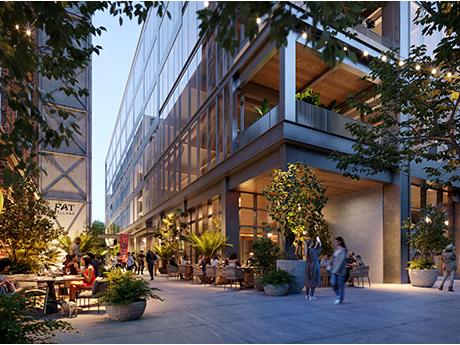
T3 FAT Village is a 180,000-square-foot mass-timber office building that features ground-level retail space.


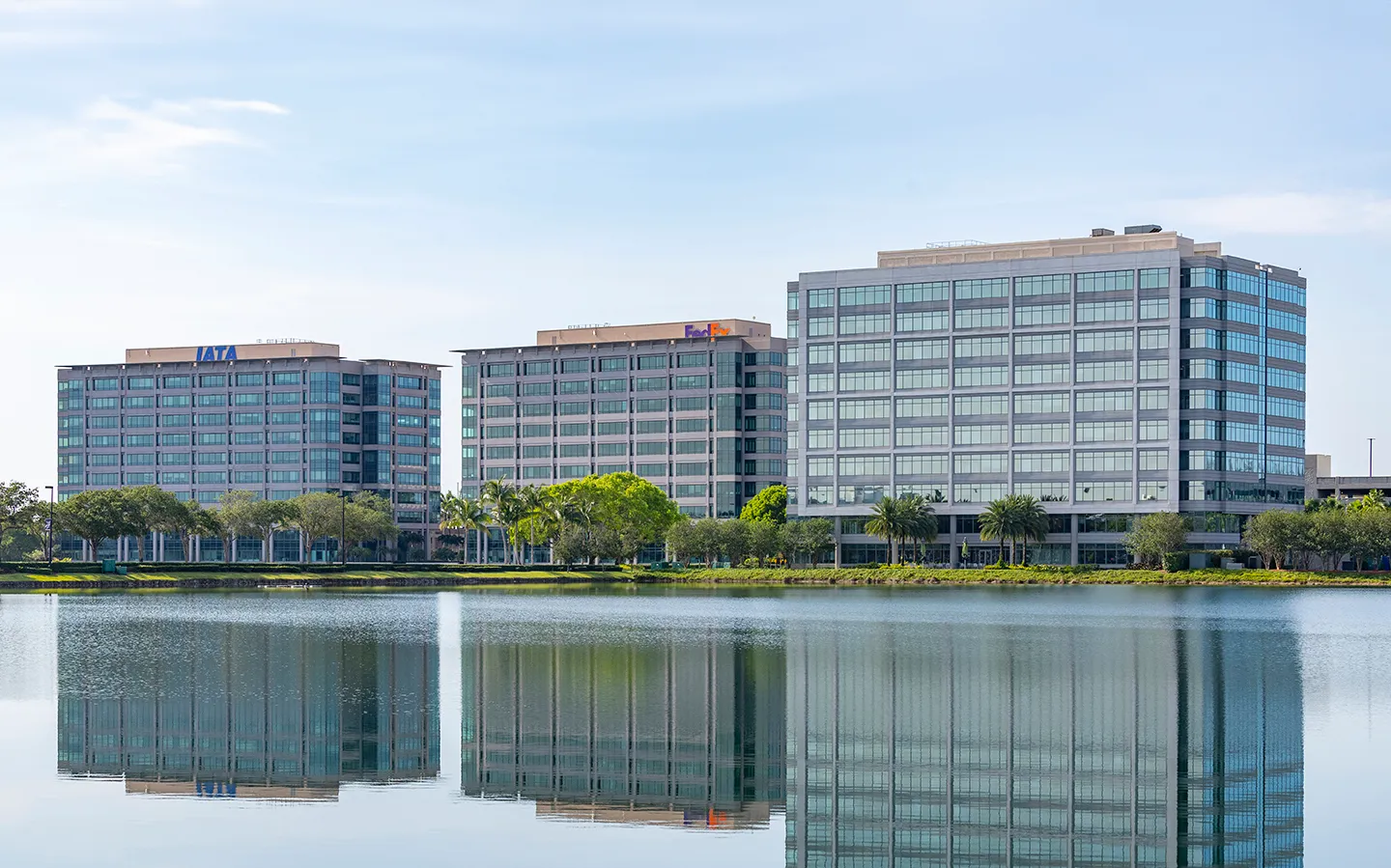
Blanca Commercial Real Estate, exclusive leasing agent for Waterford Business District (WBD), announced 117,764 square feet of leasing activity at the office campus, reinforcing the district’s continued appeal among both expanding companies and long-standing corporate tenants seeking highly connected, amenity-driven workplaces in Miami.
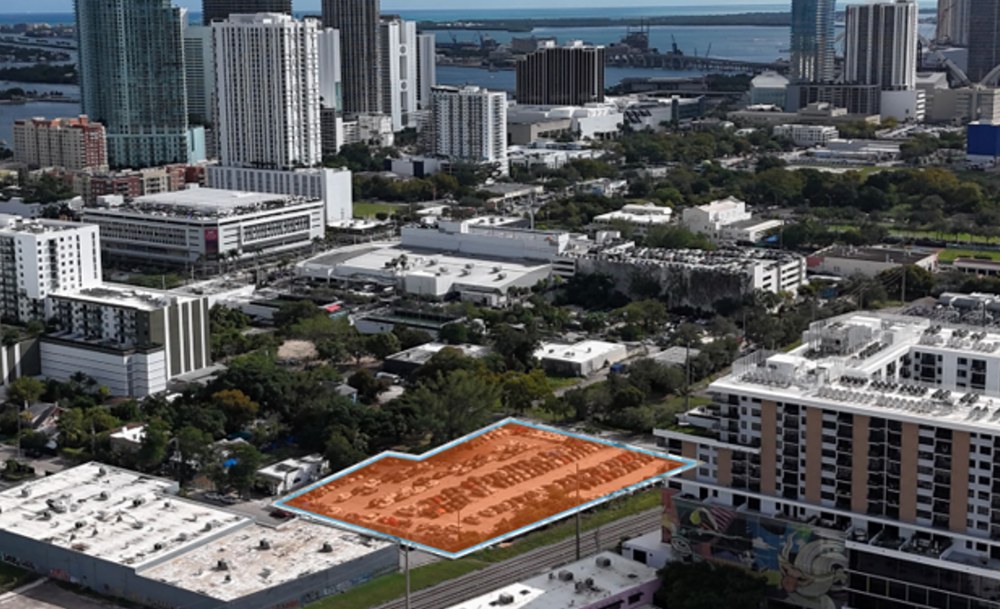
The sale equates to roughly $281 per square foot of land. Ursus Inc., which has since merged into 22 CO, sold the property to 110 NE 23rd Street Realty LLC. The purchase adds to a run of land trades along the Edgewater-Wynwood line, where large, assemblable sites have become increasingly scarce as both neighborhoods have filled in with new development. The Edgewater Development Site is among the largest single parcels to change hands in the area this year. “This stretch between Edgewater and Wynwood is one of the last places in the urban core where you can still assemble more than an acre under one zoning designation,” said Cary Cohen, Executive Vice President at Blanca Commercial Real Estate. “When a site like that comes together, it draws real competition, and that’s exactly what we saw here.” The site sits at 50, 60, 68 and 76 NE 23rd Street and 49 and 51 NE 22nd Street, within an Opportunity Zone and zoned T6-8-O, which allows up to 300 units per acre with a density boost the Miami City Commission approved for the neighborhood. The parcels also qualify for additional height and density under Florida’s Live Local Act. The site sits between Wynwood and Biscayne Bay, a few blocks from Margaret Pace Park. “Edgewater is running out of sites this size,” said Cohen. “The neighborhood has pulled in real capital since 2020, and the parcels large enough to support a ground-up project of any scale are getting harder to find every year. Buyers who can move quickly on land like this are proving that out in real time.” Edgewater has drawn roughly $500 million in property investment since 2020, according to Blanca CRE, as projects including Aria Reserve, Missoni Baia and Cove Miami have delivered or broken ground nearby. Developers can unlock additional density through a payment into the city’s Resilience Trust Fund. Key Facts Sale price: $16.5 million Buyer: Melo Group Property type: Development assemblage Location: North Miami Avenue and Northeast 13th Street, near Miami’s Edgewater neighborhood Total land area: Approximately 35,000 square feet Zoning: T6-24a-O mixed-use zoning Development potential: Up to 24 stories, with additional height potentially available through bonuses Future plans: No development proposal was announced at the time of the sale Share this entry You might also like CBRE Arranges New HQ Lease For Crystal Cruises Risk Management Company Inks Miami’s Largest Office Lease Transaction YTD Blanca Commercial Finalizes 31,500 SF Office Lease With Auto Insurance Carrier Blanca CRE Inks Nearly 50K SF Of New Leases, Renewals At O Towers Related And Shoma To Develop Mixed-Use Project New 11-Acre Mixed-Use Development In Downtown Miami Signs Two Major Office Tenants
Get the latest property updates, market reports, and expert insights — delivered straight to your inbox.


